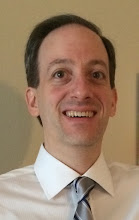
After surviving the Holocaust and escaping from behind the Iron Curtain
to freedom in the United States, Jerzy Kosinski wrote two non-fiction
books under the pseudonym Joseph Novak before embarking on a very
successful career as a novelist. Kosinski is best known for his novels The Painted Bird and Steps, which won the 1969 National Book Award.
In a 1988 lecture at the Smithsonian Institution, Kosinski touched on a
variety of subjects, including chess. Chess was a big part of the
Jewish-Polish culture in which Kosinski grew up in the 1930s and 1940s.
Kosinski lamented the rise of television as an opiate for the masses and
dreamed of a future in which widespread participation in chess would benefit society as a whole:
Imagine a time when chess really is a sport not just for masters but
for the masses--a time when boxers or wrestlers are no longer considered
fun to watch and when chess is a Las Vegas-style event. Kids would
notice. They would learn how to play it from television or the Internet.
They could play with other people on video games or by themselves on
computers. Playing against a computer could even help to raise their
game. Perhaps the game that my father used to call a great Jewish game
could become a national game. And the result would be a new generation
of people who would know how to concentrate.
Concentration means focusing. It means making good choices. It means
spirituality. It means knowing who you are, looking at yourself as if
you were a chessboard, and assessing the options you have in life. Do
you move to the left? Do you go to the right? The game of chess could
open up other worlds--of creativity, of big business, of politics, of
Wall Street--all of which require a similar level of concentration.
That brings me to the end of my private fantasy: that one day kids
everywhere will be masters of concentration, not slaves to a television
set.
Kosinski's vision is quite prescient. When he wrote those words, the
internet was in its infancy and the use of chess computers as a serious
training tool had only just begun. Now, the ubiquity of internet chess
and the extraordinary strength of chess computers have given rise to a
record-setting group of young chess phenoms. One of those phenoms, World Chess Champion Magnus Carlsen,
has the right combination of skills, charisma and youth to lift chess
to unprecedented heights. Carlsen is a magnificent player who is more
balanced emotionally than Bobby Fischer,
who created a short-lived chess boom in the 1970s that quickly went
bust after he relinquished his World Championship title and went into a
two decades-long seclusion.
Kosinski is right that chess can and should play a role in elevating our
culture. Perhaps Carlsen as an active World Chess Champion and former World Chess Champion Garry Kasparov--who
is doing great work to promote chess in the schools worldwide--will
fulfill the vision that Kosinski so eloquently described more than a
quarter century ago.
Showing posts with label Jerzy Kosinski. Show all posts
Showing posts with label Jerzy Kosinski. Show all posts
Saturday, July 18, 2015
Thursday, September 26, 2013
Camus and Monod Wrestled With "The Problem of Meaning"
"Everybody's looking 4 for the ladder...everybody wants to know how the story started and how it will end."--Prince, "The Ladder"
"The principle of art is to pause, not bypass. The principle of true art is not to portray, but to evoke. This requires a moment of pause--a contract with yourself through the object you look at or the page you read. In that moment of pause, I think life expands. And really the purpose of art--for me, of fiction--is to alert, to indicate to stop, to say: Make certain that when you rush through you will not miss the moment which you might have had, or might still have. That is the moment of finding something which you have not known about yourself, or your environment, about others, and about life."--Jerzy Kosinski, 1977 interview by Lisa Grunwald
Sean Carroll's new book Brave Genius: A Scientist, a Philosopher, and Their Daring Adventures from the French Resistance to the Nobel Prize tells the intertwined life stories of Jacques Monod (who won the 1965 Nobel Prize for Physiology or Medicine) and Albert Camus (who won the 1957 Nobel Prize for Literature). Many so-called French intellectuals collaborated with France's Nazi occupiers during World War II but Camus and Monod participated in the Resistance Movement, though they did not meet each other face to face until 1948.
Steven Shapin's September 21-22, 2013 Wall Street Journal review of Carroll's book (titled "A Collaboration Across Two Cultures") explains that both men sought "the secrets of life":
For Camus, the secrets were about the conditions of finding meaning and value in an absurd, meaningless world; for Monod, modern science was the practice that eroded traditional notions of meaning and value and that searched for the objective mechanisms used by life to reproduce itself and to perform all its functions, including the functions associated with thought and feeling. At a fundamental level, all the phenomena of life were coded by DNA and expressed in proteins, but molecules have no meaning.
In his book Chance and Necessity, Monod declared that even though science can provide many answers and solutions, "we now realize...that the problem of meaning is the one to which no scientific answer ever could be provided." Monod's outlook greatly influenced the thinking and writing of novelist Jerzy Kosinski; Kosinski, a skilled photographer, visited the terminally ill Monod shortly before the scientist's death and--with Monod's approval--produced pictures of the Nobel laureate's final hours. Kosinski also wrote an essay for Esquire about Monod's ideas, his life and his death.
Chance and Necessity concluded with these stark words: "The ancient covenant is in pieces; man knows at last that he is alone in the universe's unfeeling immensity, out of which he emerged only by chance. His destiny is nowhere spelled out, nor is his duty. The kingdom above or the darkness below: it is for him to choose." If you are a religious believer then you reject Monod's statement because you believe that the universe exists not because of chance but because of God's will. However, regardless of your religious and/or philosophical outlook, it is quite humbling, awe inspiring and even frightening to consider the reality that Earth is just a tiny, pale blue dot (to borrow Carl Sagan's phrase) in an incomprehensibly vast and mysterious universe; any power or energy that humanity generates on Earth is minuscule compared to the vast powers and energies pulsating through the cosmos.
Chance and Necessity has two epigraphs; one is a brief Democritus quote ("Everything existing in the Universe is the fruit of chance and of necessity"), while the other consists of two paragraphs from Camus' book The Myth of Sisyphus. Shapin's final sentences summarize Monod's larger message:
Face the facts; have courage; accept that the only meaning available is the meaning you produce for yourself. Life is the struggle to make the meaning that nature no longer has. The scientist created nature-without-meaning; the philosopher pronounced on how to live in it.
"The principle of art is to pause, not bypass. The principle of true art is not to portray, but to evoke. This requires a moment of pause--a contract with yourself through the object you look at or the page you read. In that moment of pause, I think life expands. And really the purpose of art--for me, of fiction--is to alert, to indicate to stop, to say: Make certain that when you rush through you will not miss the moment which you might have had, or might still have. That is the moment of finding something which you have not known about yourself, or your environment, about others, and about life."--Jerzy Kosinski, 1977 interview by Lisa Grunwald
Sean Carroll's new book Brave Genius: A Scientist, a Philosopher, and Their Daring Adventures from the French Resistance to the Nobel Prize tells the intertwined life stories of Jacques Monod (who won the 1965 Nobel Prize for Physiology or Medicine) and Albert Camus (who won the 1957 Nobel Prize for Literature). Many so-called French intellectuals collaborated with France's Nazi occupiers during World War II but Camus and Monod participated in the Resistance Movement, though they did not meet each other face to face until 1948.
Steven Shapin's September 21-22, 2013 Wall Street Journal review of Carroll's book (titled "A Collaboration Across Two Cultures") explains that both men sought "the secrets of life":
For Camus, the secrets were about the conditions of finding meaning and value in an absurd, meaningless world; for Monod, modern science was the practice that eroded traditional notions of meaning and value and that searched for the objective mechanisms used by life to reproduce itself and to perform all its functions, including the functions associated with thought and feeling. At a fundamental level, all the phenomena of life were coded by DNA and expressed in proteins, but molecules have no meaning.
In his book Chance and Necessity, Monod declared that even though science can provide many answers and solutions, "we now realize...that the problem of meaning is the one to which no scientific answer ever could be provided." Monod's outlook greatly influenced the thinking and writing of novelist Jerzy Kosinski; Kosinski, a skilled photographer, visited the terminally ill Monod shortly before the scientist's death and--with Monod's approval--produced pictures of the Nobel laureate's final hours. Kosinski also wrote an essay for Esquire about Monod's ideas, his life and his death.
Chance and Necessity concluded with these stark words: "The ancient covenant is in pieces; man knows at last that he is alone in the universe's unfeeling immensity, out of which he emerged only by chance. His destiny is nowhere spelled out, nor is his duty. The kingdom above or the darkness below: it is for him to choose." If you are a religious believer then you reject Monod's statement because you believe that the universe exists not because of chance but because of God's will. However, regardless of your religious and/or philosophical outlook, it is quite humbling, awe inspiring and even frightening to consider the reality that Earth is just a tiny, pale blue dot (to borrow Carl Sagan's phrase) in an incomprehensibly vast and mysterious universe; any power or energy that humanity generates on Earth is minuscule compared to the vast powers and energies pulsating through the cosmos.
Chance and Necessity has two epigraphs; one is a brief Democritus quote ("Everything existing in the Universe is the fruit of chance and of necessity"), while the other consists of two paragraphs from Camus' book The Myth of Sisyphus. Shapin's final sentences summarize Monod's larger message:
Face the facts; have courage; accept that the only meaning available is the meaning you produce for yourself. Life is the struggle to make the meaning that nature no longer has. The scientist created nature-without-meaning; the philosopher pronounced on how to live in it.
Tuesday, June 25, 2013
Only Thoughts and Actions Can be Controlled, Not Outcomes
"For the uncontrolled there is no wisdom, nor for the uncontrolled is there the power of concentration; and for him without concentration there is no peace. And for the unpeaceful, how can there be happiness?"--passage from the Bhagavad Gita, as quoted in Jerzy Kosinski's Steps
"The man who is secure within himself has no need to prove anything with force, so he can walk away from a fight with dignity and pride. He is the true martial artist--a man so strong inside that he has no need to demonstrate his power."--Ed Parker
I have always had a strong feeling about the importance of doing things the right way and I have always been greatly bothered by any situation in which things are not done the right way (or what I perceive to be the right way) but there can be a negative result from being so focused on trying to fix every perceived injustice: "Too much [yetzer hatov] leads to premature saintliness. If one is overly righteous, one is likely to become suicidal."
Almost every person in my life has disappointed me to some extent but I am the person who has disappointed myself the most--and after some deep reflection about various situations I now realize the reason for all of this disappointment is very clear: heightened, unrealistic expectations about life and a desire for perfection inevitably lead to self-inflicted suffering.
In his monograph Life Was Never Meant to Be a Struggle, Stuart Wilde wrote:
Are you struggling to fix the world? If so, why? It's a bit of an ego trip when people think they can fix things. If you can see the world as an evolution--the way God would see it--you would know it's more or less perfect and does not need fixing. It's only when we view the world within the finite context of our emotions and ego that it looks less than perfect.
You can instantly become happy and free by deciding to leave the world alone and concentrate instead on yourself. By strengthening yourself, you serve all humanity. Each of us is linked to one another.
I do not agree with Wilde that the world is "more or less perfect"--in fact, I vigorously disagree with that notion--but I agree with him about the importance of self-improvement. I have no power to change the things that people say and do that make no sense to me but I have the power to control my reactions to the world's irrationality; I can choose to focus on enjoying my life and being as productive as I am capable of being, as opposed to dwelling on the world's problems and imperfections. When I first read the above quote from the Bhagavad Gita, I understood it to refer to self-control as a precursor to being able to control events and outcomes but now I understand self-control to be a worthy end in and of itself.
During the fateful lightsaber duel between Jedi Master Qui-Gon Jinn and Darth Maul in Star Wars Episode I: The Phantom Menace, a force field temporarily separated the two combatants; Darth Maul paced back and forth like a predator poised to kill its prey, while Qui-Gon Jinn knelt down, closed his eyes and meditated: Qui-Gon Jinn knew that his whole life and his entire training had culminated at this moment and that he needed to control his emotions, embrace concentration and focus his energies. The way that Qui-Gon Jinn maintained such equanimity and poise while facing a devil-horned opponent brandishing a double-sided lightsaber is a great example of how one should face all of life's challenges, great and small: trust your training and your instincts, do your best and accept the outcome. That particular outcome was not good for Qui-Gon Jinn--Darth Maul killed him--but Qui-Gon Jinn's apprentice Obi-Wan Kenobi immediately killed Darth Maul and Kenobi's apprentice Luke Skywalker eventually brought down the evil Galactic Empire. Qui-Gon Jinn's influence resonated long after his death because of the way that he lived his life.
In a recent chess tournament, I won a game because my opponent responded to my blunder ...Nxe5 with the blunder Nxf7 instead of playing Nb5, which would have given him a winning position. Winning chess games used to make me feel very happy, while losing chess games used to make me feel very upset but those reactions are too extreme. A better, more balanced path is to prepare properly before the event, concentrate fully during the event, enjoy the entire process and not overreact to the result. All that a person can control is his own actions; outcomes and results are influenced by factors that a person cannot control: the results of other games affect who I get paired against--which means that I could face someone whose style is a good matchup or someone whose style is a difficult matchup--and my opponent's training, discipline and outlook affect the quality of his moves, so unless I play perfect moves 100% of the time I cannot control the outcome of the game. Of course, the better that I play the more influence I can exert over that outcome and that is one of the most seductive qualities of chess: the illusion that with only a little more knowledge and discipline a person can completely control his destiny (echoes of that illusion can be heard in the famous concluding words of F. Scott Fitzgerald's The Great Gatsby). The difference between winning a game and losing a game and the difference between winning a tournament and finishing in the middle of the pack is sometimes just one move, one flickering of a neuron in someone's mind.
If I had been more well-rested and/or if I had studied more before the tournament then perhaps I would have played a different move but I have many interests and I enjoy the time/energy that I devote to those interests; I am not making excuses about that blunder or any other chess blunder, just stating the truth. At that moment under those conditions, ...Nxe5 was the best move I could find; I did not play impatiently and I thought that I had considered all of the relevant tactics. A minute or two after I played ...Nxe5, I saw the Nb5 idea; while I waited to see which move my opponent would play, I pondered the folly of basing one's emotional state on what happened next: I knew that the outcome of the game would likely be determined by his move and that if I was not careful then I could permit that outcome to affect my mood for the next several days. I vowed that, whatever happened, I would not overreact. I tried my best and ...Nxe5 is the move that I played, so there is nothing to be elated about and nothing to be upset about; winning the game after my opponent blundered did not "prove" anything about me (or about my opponent).
My opponent also did not rush and I assume that he did the best that he could under his individual circumstances. I have deliberately not given the complete move list or provided a diagram of the game position, because this particular game and these particular moves are just vibrations of a much larger cosmic string. If my opponent or I had vibrated the string a bit differently then we would have played a different melody but--regardless of the melody we created--there is nothing to cry about here. I should celebrate that I have been playing tournament chess for more than 25 years and that I am capable of playing chess at a higher level than 97% of all rated players; my young opponent should celebrate that he is already a strong player and that if he stays on his current path then he likely will become a chess master. No, it is even simpler than that: regardless of years spent or rating points obtained, the enjoyment of playing the game in the moment is the height of ecstasy; the game result is logically determined by the combined mental and psychological states of both players and there is no reason to become emotional about that logically determined outcome: if you have a succession of outcomes that you deem to be unsatisfactory then it is necessary to adjust your life pattern (sleep habits, study habits, etc.) to maximize the chance that you will enjoy better outcomes in the future.
Easy to say, hard to do but very necessary. My opponent looked distraught when he realized that he had blundered and I understand that feeling all too well. Chess is a very violent game; it may not be possible to completely eradicate the suffering one feels after a loss but I think that determined, focused concentration can result in a modified perspective.
In his aforementioned book, Stuart Wilde declared, "Conflict is always just a divergence of opinions. Are you struggling to convince others that your opinion is right? And if you are right, so what? To win a moral victory at the expense of your sanity is dumb." This article represents my attempt to explain my mental, emotional and psychological evolution as I understand and perceive this ongoing process; it contains insights that have helped me achieve greater tranquility and balance and I believe that those insights could help other open-minded people as well: I welcome the opportunity to interact with introspective people who are thinking about these issues but, following Wilde's sage advice, I have no interest in trying to convince anyone that anything that I have written is true, important or even relevant.
"The man who is secure within himself has no need to prove anything with force, so he can walk away from a fight with dignity and pride. He is the true martial artist--a man so strong inside that he has no need to demonstrate his power."--Ed Parker
I have always had a strong feeling about the importance of doing things the right way and I have always been greatly bothered by any situation in which things are not done the right way (or what I perceive to be the right way) but there can be a negative result from being so focused on trying to fix every perceived injustice: "Too much [yetzer hatov] leads to premature saintliness. If one is overly righteous, one is likely to become suicidal."
Almost every person in my life has disappointed me to some extent but I am the person who has disappointed myself the most--and after some deep reflection about various situations I now realize the reason for all of this disappointment is very clear: heightened, unrealistic expectations about life and a desire for perfection inevitably lead to self-inflicted suffering.
In his monograph Life Was Never Meant to Be a Struggle, Stuart Wilde wrote:
Are you struggling to fix the world? If so, why? It's a bit of an ego trip when people think they can fix things. If you can see the world as an evolution--the way God would see it--you would know it's more or less perfect and does not need fixing. It's only when we view the world within the finite context of our emotions and ego that it looks less than perfect.
You can instantly become happy and free by deciding to leave the world alone and concentrate instead on yourself. By strengthening yourself, you serve all humanity. Each of us is linked to one another.
I do not agree with Wilde that the world is "more or less perfect"--in fact, I vigorously disagree with that notion--but I agree with him about the importance of self-improvement. I have no power to change the things that people say and do that make no sense to me but I have the power to control my reactions to the world's irrationality; I can choose to focus on enjoying my life and being as productive as I am capable of being, as opposed to dwelling on the world's problems and imperfections. When I first read the above quote from the Bhagavad Gita, I understood it to refer to self-control as a precursor to being able to control events and outcomes but now I understand self-control to be a worthy end in and of itself.
During the fateful lightsaber duel between Jedi Master Qui-Gon Jinn and Darth Maul in Star Wars Episode I: The Phantom Menace, a force field temporarily separated the two combatants; Darth Maul paced back and forth like a predator poised to kill its prey, while Qui-Gon Jinn knelt down, closed his eyes and meditated: Qui-Gon Jinn knew that his whole life and his entire training had culminated at this moment and that he needed to control his emotions, embrace concentration and focus his energies. The way that Qui-Gon Jinn maintained such equanimity and poise while facing a devil-horned opponent brandishing a double-sided lightsaber is a great example of how one should face all of life's challenges, great and small: trust your training and your instincts, do your best and accept the outcome. That particular outcome was not good for Qui-Gon Jinn--Darth Maul killed him--but Qui-Gon Jinn's apprentice Obi-Wan Kenobi immediately killed Darth Maul and Kenobi's apprentice Luke Skywalker eventually brought down the evil Galactic Empire. Qui-Gon Jinn's influence resonated long after his death because of the way that he lived his life.
In a recent chess tournament, I won a game because my opponent responded to my blunder ...Nxe5 with the blunder Nxf7 instead of playing Nb5, which would have given him a winning position. Winning chess games used to make me feel very happy, while losing chess games used to make me feel very upset but those reactions are too extreme. A better, more balanced path is to prepare properly before the event, concentrate fully during the event, enjoy the entire process and not overreact to the result. All that a person can control is his own actions; outcomes and results are influenced by factors that a person cannot control: the results of other games affect who I get paired against--which means that I could face someone whose style is a good matchup or someone whose style is a difficult matchup--and my opponent's training, discipline and outlook affect the quality of his moves, so unless I play perfect moves 100% of the time I cannot control the outcome of the game. Of course, the better that I play the more influence I can exert over that outcome and that is one of the most seductive qualities of chess: the illusion that with only a little more knowledge and discipline a person can completely control his destiny (echoes of that illusion can be heard in the famous concluding words of F. Scott Fitzgerald's The Great Gatsby). The difference between winning a game and losing a game and the difference between winning a tournament and finishing in the middle of the pack is sometimes just one move, one flickering of a neuron in someone's mind.
If I had been more well-rested and/or if I had studied more before the tournament then perhaps I would have played a different move but I have many interests and I enjoy the time/energy that I devote to those interests; I am not making excuses about that blunder or any other chess blunder, just stating the truth. At that moment under those conditions, ...Nxe5 was the best move I could find; I did not play impatiently and I thought that I had considered all of the relevant tactics. A minute or two after I played ...Nxe5, I saw the Nb5 idea; while I waited to see which move my opponent would play, I pondered the folly of basing one's emotional state on what happened next: I knew that the outcome of the game would likely be determined by his move and that if I was not careful then I could permit that outcome to affect my mood for the next several days. I vowed that, whatever happened, I would not overreact. I tried my best and ...Nxe5 is the move that I played, so there is nothing to be elated about and nothing to be upset about; winning the game after my opponent blundered did not "prove" anything about me (or about my opponent).
My opponent also did not rush and I assume that he did the best that he could under his individual circumstances. I have deliberately not given the complete move list or provided a diagram of the game position, because this particular game and these particular moves are just vibrations of a much larger cosmic string. If my opponent or I had vibrated the string a bit differently then we would have played a different melody but--regardless of the melody we created--there is nothing to cry about here. I should celebrate that I have been playing tournament chess for more than 25 years and that I am capable of playing chess at a higher level than 97% of all rated players; my young opponent should celebrate that he is already a strong player and that if he stays on his current path then he likely will become a chess master. No, it is even simpler than that: regardless of years spent or rating points obtained, the enjoyment of playing the game in the moment is the height of ecstasy; the game result is logically determined by the combined mental and psychological states of both players and there is no reason to become emotional about that logically determined outcome: if you have a succession of outcomes that you deem to be unsatisfactory then it is necessary to adjust your life pattern (sleep habits, study habits, etc.) to maximize the chance that you will enjoy better outcomes in the future.
Easy to say, hard to do but very necessary. My opponent looked distraught when he realized that he had blundered and I understand that feeling all too well. Chess is a very violent game; it may not be possible to completely eradicate the suffering one feels after a loss but I think that determined, focused concentration can result in a modified perspective.
In his aforementioned book, Stuart Wilde declared, "Conflict is always just a divergence of opinions. Are you struggling to convince others that your opinion is right? And if you are right, so what? To win a moral victory at the expense of your sanity is dumb." This article represents my attempt to explain my mental, emotional and psychological evolution as I understand and perceive this ongoing process; it contains insights that have helped me achieve greater tranquility and balance and I believe that those insights could help other open-minded people as well: I welcome the opportunity to interact with introspective people who are thinking about these issues but, following Wilde's sage advice, I have no interest in trying to convince anyone that anything that I have written is true, important or even relevant.
Wednesday, May 15, 2013
appreciating e.e. cummings
E.E. Cummings is not the greatest poet of all-time or even the greatest poet of the 20th century but he wrote with a distinctive voice that still resonates and that sets him apart from any other poet. From his earliest poetic efforts, Cummings forged his own path, bending--no, breaking, shattering and obliterating--grammatical and syntactical customs; his poems featured few or no capitalized letters, syncopated rhythms, stylized word spellings and stanza structures that challenged both typesetters and readers. Cummings' unique style defied poetic orthodoxy much like Salvador Dali's now-iconic painting "The Persistence of Memory" defied painting orthodoxy; Dali presented ordinary objects as part of a grand surrealistic vision and his twisted clocks force us to confront the mystery of time and existence, while Cummings' oddly shaped stanzas force us to focus on the meaning of each carefully chosen word: you cannot casually read a Cummings poem, just like you cannot casually view a Dali painting; in both cases you must interact with the art and let the art interact with your mind and your emotions. Through careful and disciplined manipulation of form, Cummings demanded the reader's full attention; free verse requires that the writer not let freedom descend into chaos and that the reader must concentrate in order to understand the writer's message.
This is my favorite Cummings poem:
if up's the word;and a world grows greener
minute by second and most by more-
if death is the loser and life is the winner
(and beggars are rich but misers are poor)
-let's touch the sky:
with a to and a fro
(and a here there where)and away we go
in even the laziest creature among us
a wisdom no knowledge can kill is astir-
now dull eyes are keen and now keen eyes are keener
(for young is the year,for young is the year)
-let's touch the sky:
with a great(and a gay
and a steep)deep rush through amazing day
it's brains without hearts have set saint against sinner;
put gain over gladness and joy under care-
let's do as an earth which can never do wrong does
(minute by second and most by more)
-let's touch the sky:
with a strange(and a true)
and a climbing fall into far near blue
if beggars are rich(and a robin will sing his
robin a song)but misers are poor-
let's love until noone could quite be(and young is
the year,dear)as living as i'm and as you're
-let's touch the sky:
with a you and a me
and an every(who's any who's some)one who's we
I love the couplet "in even the laziest creature among us/a wisdom no knowledge can kill is astir"; it conjures two images for me: one image is that of a seemingly "slow" person who shines and thrives if someone takes the time to patiently teach him and the other image is of a person who retains his wisdom even after enduring 12 years of being force-fed all of the "knowledge" that the American public education system purports to dispense. Cummings saw that there is inherent wisdom--and worth--inside every person, regardless of that person's seemingly "lazy" disposition and regardless of the way that certain experiences may have dulled that wisdom/concealed that worth.
Cummings' poetry challenges readers in a way that was once widely considered enchanting but his reputation has not grown after his passing, perhaps because readers no longer want to be challenged. Cummings anticipated that his writings--and what he called "The New Art" in general--might not be well received by some audiences. During a Harvard commencement address that he delivered in 1915 at just 20 years of age, Cummings presciently predicted that the "fakirs and fanatics" would not view with favor works of art that explore methods, emotions and concepts that fall outside of the norm. In an article titled "Make it Newish" (May 2005, Harper's Magazine), Wyatt Mason explains, "Cummings had come to issue a corrective to an audience ignorant of any error."
Cummings hoped that society would embrace art that challenges preconceptions and that reveals new ways to look at the world but society instead lurched in the opposite direction. More than 30 years ago, Jerzy Kosinski lamented how much people rely on "The constant companionship of distracting devices" and he warned that we are becoming a nation of "videots." Kosinski decried what we would now call "reality" TV before the concept had even devolved into its current form and he told interviewer David Sohn, "I look at the children who spend five or six hours watching television every day, and I notice that when in groups they cannot interact with each other. They are terrified of each other; they develop secondary anxiety characteristics. They want to watch, they don't want to be spoken to. They want to watch, they don't want to talk. They want to watch, they don't want to be asked questions or singled out."
"Videots" will not take the time or expend the effort to untangle Cummings' unorthodox poetic structures; they will not read slowly enough and with enough concentration to discern the method underlying what superficially seems like random, chaotic madness. Cummings sought poetic/artistic truth and such a quest is out of step with a society that values "reality" TV over poetry, artistry or truth.
After describing Cummings' compositional methods, Mason's article discusses three major biographies of Cummings. Mason considers Charles Norman's The Magic-Maker "an affectionate profile" but notes that its objectivity is somewhat compromised due to the heavy influence that Cummings exerted on the composition of the book's final draft. Mason praises Richard S. Kennedy's Dreams in the Mirror for not only being exhaustively researched but also for being very well written. Mason finds strong evidence of plagiarism in Christopher Sawyer-Laucanno's E.E. Cummings: a biography; Mason demonstrates that Sawyer-Laucanno used Kennedy's research without proper attribution and even directly lifted several passages from Kennedy's book while only making very slight changes to the text. Few crimes are more destructive than theft; no community can tolerate rampant theft, which is why even in the animal kingdom thiefs are treated quite harshly: it is understandable--if a bit extreme to civilized minds--why some societies sanction that a thief's hands should be cut off. The theft of someone's ideas/intellectual property is particularly egregious; such theft deeply violates the victim and reveals the moral emptiness of the victimizer. Mason notes how ironic it is that deception runs rampant throughout a book about a writer who was so devoted to artistic truth and so passionate about creating unique works. Mason soberly ponders what this means:
It tells us that we are drowning in information--unreliable information, shoddy information, wrong information. It tells us that, as a culture, literary or otherwise, we are letting our ignorance lead us. Ignorance is nothing more than an indifference to what is before us; we have only to pay attention--and we are paying attention in a way, but to pretty noise, the newer the better. Pound knew this, and Cummings knew this, and they tried to devise a means by which we might pay better attention to our world. The pictured caves of the Dordogne marked by prehistoric hands; the tattered verses once sung by a girl with a lyre; a tapestry that tells of a thousand-year-old battle upon which a certain comet may be seen, bright as any star: these delicate things are evidence, proofs that others like us looked at the world once. These are the sources of ourselves, our truest fossil record. The Modernists feared we were burying this record and, with that burial, losing what was best in us under waves of what was worst. They set out to help us remember. But, of course, Modernism failed. It never had a chance.
Put even more simply, one could note that there are hundreds of cable/satellite TV channels available but most of them broadcast nothing more than "pretty noise, the newer the better." U.S. Chess Champion/philosophy professor Stuart Rachels expresses a similar sentiment in different words, decrying America's "deeply engrained anti-intellectualism." That anti-intellectualism explains why "Modernism...never had a chance"; our society does not train people to savor the joys of thinking and the merits of sustained concentration: anything that cannot be tweeted in 140 characters or less must not be important--or so we have been told (brainwashed).
This is my favorite Cummings poem:
if up's the word;and a world grows greener
minute by second and most by more-
if death is the loser and life is the winner
(and beggars are rich but misers are poor)
-let's touch the sky:
with a to and a fro
(and a here there where)and away we go
in even the laziest creature among us
a wisdom no knowledge can kill is astir-
now dull eyes are keen and now keen eyes are keener
(for young is the year,for young is the year)
-let's touch the sky:
with a great(and a gay
and a steep)deep rush through amazing day
it's brains without hearts have set saint against sinner;
put gain over gladness and joy under care-
let's do as an earth which can never do wrong does
(minute by second and most by more)
-let's touch the sky:
with a strange(and a true)
and a climbing fall into far near blue
if beggars are rich(and a robin will sing his
robin a song)but misers are poor-
let's love until noone could quite be(and young is
the year,dear)as living as i'm and as you're
-let's touch the sky:
with a you and a me
and an every(who's any who's some)one who's we
I love the couplet "in even the laziest creature among us/a wisdom no knowledge can kill is astir"; it conjures two images for me: one image is that of a seemingly "slow" person who shines and thrives if someone takes the time to patiently teach him and the other image is of a person who retains his wisdom even after enduring 12 years of being force-fed all of the "knowledge" that the American public education system purports to dispense. Cummings saw that there is inherent wisdom--and worth--inside every person, regardless of that person's seemingly "lazy" disposition and regardless of the way that certain experiences may have dulled that wisdom/concealed that worth.
Cummings' poetry challenges readers in a way that was once widely considered enchanting but his reputation has not grown after his passing, perhaps because readers no longer want to be challenged. Cummings anticipated that his writings--and what he called "The New Art" in general--might not be well received by some audiences. During a Harvard commencement address that he delivered in 1915 at just 20 years of age, Cummings presciently predicted that the "fakirs and fanatics" would not view with favor works of art that explore methods, emotions and concepts that fall outside of the norm. In an article titled "Make it Newish" (May 2005, Harper's Magazine), Wyatt Mason explains, "Cummings had come to issue a corrective to an audience ignorant of any error."
Cummings hoped that society would embrace art that challenges preconceptions and that reveals new ways to look at the world but society instead lurched in the opposite direction. More than 30 years ago, Jerzy Kosinski lamented how much people rely on "The constant companionship of distracting devices" and he warned that we are becoming a nation of "videots." Kosinski decried what we would now call "reality" TV before the concept had even devolved into its current form and he told interviewer David Sohn, "I look at the children who spend five or six hours watching television every day, and I notice that when in groups they cannot interact with each other. They are terrified of each other; they develop secondary anxiety characteristics. They want to watch, they don't want to be spoken to. They want to watch, they don't want to talk. They want to watch, they don't want to be asked questions or singled out."
"Videots" will not take the time or expend the effort to untangle Cummings' unorthodox poetic structures; they will not read slowly enough and with enough concentration to discern the method underlying what superficially seems like random, chaotic madness. Cummings sought poetic/artistic truth and such a quest is out of step with a society that values "reality" TV over poetry, artistry or truth.
After describing Cummings' compositional methods, Mason's article discusses three major biographies of Cummings. Mason considers Charles Norman's The Magic-Maker "an affectionate profile" but notes that its objectivity is somewhat compromised due to the heavy influence that Cummings exerted on the composition of the book's final draft. Mason praises Richard S. Kennedy's Dreams in the Mirror for not only being exhaustively researched but also for being very well written. Mason finds strong evidence of plagiarism in Christopher Sawyer-Laucanno's E.E. Cummings: a biography; Mason demonstrates that Sawyer-Laucanno used Kennedy's research without proper attribution and even directly lifted several passages from Kennedy's book while only making very slight changes to the text. Few crimes are more destructive than theft; no community can tolerate rampant theft, which is why even in the animal kingdom thiefs are treated quite harshly: it is understandable--if a bit extreme to civilized minds--why some societies sanction that a thief's hands should be cut off. The theft of someone's ideas/intellectual property is particularly egregious; such theft deeply violates the victim and reveals the moral emptiness of the victimizer. Mason notes how ironic it is that deception runs rampant throughout a book about a writer who was so devoted to artistic truth and so passionate about creating unique works. Mason soberly ponders what this means:
It tells us that we are drowning in information--unreliable information, shoddy information, wrong information. It tells us that, as a culture, literary or otherwise, we are letting our ignorance lead us. Ignorance is nothing more than an indifference to what is before us; we have only to pay attention--and we are paying attention in a way, but to pretty noise, the newer the better. Pound knew this, and Cummings knew this, and they tried to devise a means by which we might pay better attention to our world. The pictured caves of the Dordogne marked by prehistoric hands; the tattered verses once sung by a girl with a lyre; a tapestry that tells of a thousand-year-old battle upon which a certain comet may be seen, bright as any star: these delicate things are evidence, proofs that others like us looked at the world once. These are the sources of ourselves, our truest fossil record. The Modernists feared we were burying this record and, with that burial, losing what was best in us under waves of what was worst. They set out to help us remember. But, of course, Modernism failed. It never had a chance.
Put even more simply, one could note that there are hundreds of cable/satellite TV channels available but most of them broadcast nothing more than "pretty noise, the newer the better." U.S. Chess Champion/philosophy professor Stuart Rachels expresses a similar sentiment in different words, decrying America's "deeply engrained anti-intellectualism." That anti-intellectualism explains why "Modernism...never had a chance"; our society does not train people to savor the joys of thinking and the merits of sustained concentration: anything that cannot be tweeted in 140 characters or less must not be important--or so we have been told (brainwashed).
Monday, January 7, 2013
"Earth Maze" Depicts "Unknown Potentialities Within Self and Nature"
After I played in the Second Annual Michigan Chess Festival, my friend Erika Klotz took a picture of me standing next to Derek Wernher's "Earth Maze" sculpture. I assumed that the inscription on the plaque next to the statue would be legible in the photo but later realized that this was not the case. However, after doing some research I found the complete text:
The sculpture incorporates the circle or sphere as the symbol of unity of self as well as union between man and nature. The interior or maze portion of the sculpture is a network of interconnecting passages and spaces representative of unknown potentialities within self and nature. The opposing of smooth and rough surfaces, spherical and angular forms in the piece, are different ways of blending contradicting elements to express wholeness. "Earth Maze," which is eight feet in diameter and weighs over two tons, was created by Derek Wernher of Metamora, Michigan for the Northfield Hilton Inn.
Here is the photo of me standing in front of "Earth Maze":

Erika also took a closeup shot of the interior details of "Earth Maze":

I spent the rest of that day touring Troy, Michigan with Erika, a fun conclusion to my birthday weekend trip--a trip that represented a milestone in my ongoing efforts to change my Perspective about life.
The evocative phrase "unknown potentialities within self and nature" can be interpreted and perceived in many ways. It reminds me of, among other things, the main title sequence for the Incredible Hulk TV show:
The voice-over describes Dr. David Banner's quest to tap into "the hidden strengths that all humans have." While the show emphasized physical strength, the greatest strength that all humans have is the strength of the human spirit--the capacity to know right from wrong, good from evil and then act on this knowledge even at the risk of suffering personal harm. After Dr. Banner's scientific experiment went awry, his physiology became permanently transformed and whenever he became "angry or outraged" he acquired the necessary physical strength to confront whatever evil or torments afflicted him. The capability to "hulk out" and wreak havoc against wrongdoers is an alluring fantasy but the show wisely depicted the downside as well: Dr. Banner had no memory of or control over his "hulk outs" and he was extremely concerned that he would harm innocent people (even though the show's viewers realized that the Incredible Hulk, though apparently simple-minded, possessed Dr. Banner's inherent goodness and gentleness). Dr. Banner futilely sought to cure himself and/or to remove himself from any situation that might cause him to "hulk out." A child might look at the Incredible Hulk and merely see someone who uses great physical strength to control his surroundings but Dr. Banner perceived the Incredible Hulk as an entity that lacked self-control, the most important kind of control; a passage in the Bhagavad Gita--quoted at the beginning of Jerzy Kosinski's National Book Award winning novel Steps--states, "For the uncontrolled there is no wisdom, nor for the uncontrolled is there the power of concentration; and for him without concentration there is no peace. And for the unpeaceful, how can there be happiness?" The control in question has nothing to do with manipulating others through the application of force (physical, verbal or otherwise) but rather controlling oneself--one's thoughts, emotions and actions. Dr. Banner lacked peace and happiness because he could not find a way to control the "raging spirit that dwells within him," a very apt metaphor for human existence on both the individual and societal levels because "raging spirit" can be observed in both mundane circumstances (a road rager's extended middle finger) and extreme circumstances (mass murder).
Dr. Banner's quest was poignantly captured by the haunting "Lonely Man Theme," played during the closing credits of each episode of the Incredible Hulk:
Bill Bixby, the actor who portrayed Dr. Banner, died of cancer a couple months before his 60th birthday. In his final interview, he displayed both the strong will and gentle spirit that he had in common with Dr. Banner, declaring that some people cease battling as soon as they hear the dreaded "C word" but that his attitude was, "You come and get me and you drag me away. But I'm not going to contribute to my own death." Bixby concluded with these touching words: "Be good to yourselves, because if you're good to yourself, then you'll be kind to everybody else. I'd sure like to see that before I die."
Being good to ourselves as a prelude to being kind to everybody else is an excellent way to express the "unity of self as well as union between man and nature" that Wernher depicted in "Earth Maze." In the concluding episode of Cosmos (titled "Who Speaks for Earth?"), Carl Sagan declares, "The civilization now in jeopardy is all humanity. As the ancient myth makers knew, we are children equally of the earth and sky. In our tenure of this planet, we have accumulated dangerous, evolutionary baggage--propensities for aggression and ritual, submission to leaders, hostility to outsiders, all of which puts our survival in some doubt. We have also acquired compassion for others, love for our children, a desire to learn from history and experience, and a great, soaring passionate intelligence--the clear tools for our continued survival and prosperity."
"EARTH MAZE"
The sculpture incorporates the circle or sphere as the symbol of unity of self as well as union between man and nature. The interior or maze portion of the sculpture is a network of interconnecting passages and spaces representative of unknown potentialities within self and nature. The opposing of smooth and rough surfaces, spherical and angular forms in the piece, are different ways of blending contradicting elements to express wholeness. "Earth Maze," which is eight feet in diameter and weighs over two tons, was created by Derek Wernher of Metamora, Michigan for the Northfield Hilton Inn.
Here is the photo of me standing in front of "Earth Maze":

Erika also took a closeup shot of the interior details of "Earth Maze":

I spent the rest of that day touring Troy, Michigan with Erika, a fun conclusion to my birthday weekend trip--a trip that represented a milestone in my ongoing efforts to change my Perspective about life.
The evocative phrase "unknown potentialities within self and nature" can be interpreted and perceived in many ways. It reminds me of, among other things, the main title sequence for the Incredible Hulk TV show:
The voice-over describes Dr. David Banner's quest to tap into "the hidden strengths that all humans have." While the show emphasized physical strength, the greatest strength that all humans have is the strength of the human spirit--the capacity to know right from wrong, good from evil and then act on this knowledge even at the risk of suffering personal harm. After Dr. Banner's scientific experiment went awry, his physiology became permanently transformed and whenever he became "angry or outraged" he acquired the necessary physical strength to confront whatever evil or torments afflicted him. The capability to "hulk out" and wreak havoc against wrongdoers is an alluring fantasy but the show wisely depicted the downside as well: Dr. Banner had no memory of or control over his "hulk outs" and he was extremely concerned that he would harm innocent people (even though the show's viewers realized that the Incredible Hulk, though apparently simple-minded, possessed Dr. Banner's inherent goodness and gentleness). Dr. Banner futilely sought to cure himself and/or to remove himself from any situation that might cause him to "hulk out." A child might look at the Incredible Hulk and merely see someone who uses great physical strength to control his surroundings but Dr. Banner perceived the Incredible Hulk as an entity that lacked self-control, the most important kind of control; a passage in the Bhagavad Gita--quoted at the beginning of Jerzy Kosinski's National Book Award winning novel Steps--states, "For the uncontrolled there is no wisdom, nor for the uncontrolled is there the power of concentration; and for him without concentration there is no peace. And for the unpeaceful, how can there be happiness?" The control in question has nothing to do with manipulating others through the application of force (physical, verbal or otherwise) but rather controlling oneself--one's thoughts, emotions and actions. Dr. Banner lacked peace and happiness because he could not find a way to control the "raging spirit that dwells within him," a very apt metaphor for human existence on both the individual and societal levels because "raging spirit" can be observed in both mundane circumstances (a road rager's extended middle finger) and extreme circumstances (mass murder).
Dr. Banner's quest was poignantly captured by the haunting "Lonely Man Theme," played during the closing credits of each episode of the Incredible Hulk:
Bill Bixby, the actor who portrayed Dr. Banner, died of cancer a couple months before his 60th birthday. In his final interview, he displayed both the strong will and gentle spirit that he had in common with Dr. Banner, declaring that some people cease battling as soon as they hear the dreaded "C word" but that his attitude was, "You come and get me and you drag me away. But I'm not going to contribute to my own death." Bixby concluded with these touching words: "Be good to yourselves, because if you're good to yourself, then you'll be kind to everybody else. I'd sure like to see that before I die."
Being good to ourselves as a prelude to being kind to everybody else is an excellent way to express the "unity of self as well as union between man and nature" that Wernher depicted in "Earth Maze." In the concluding episode of Cosmos (titled "Who Speaks for Earth?"), Carl Sagan declares, "The civilization now in jeopardy is all humanity. As the ancient myth makers knew, we are children equally of the earth and sky. In our tenure of this planet, we have accumulated dangerous, evolutionary baggage--propensities for aggression and ritual, submission to leaders, hostility to outsiders, all of which puts our survival in some doubt. We have also acquired compassion for others, love for our children, a desire to learn from history and experience, and a great, soaring passionate intelligence--the clear tools for our continued survival and prosperity."
Subscribe to:
Posts (Atom)